
By Paul Budden & Major Chris Jones
The Special Relationship of Japanese Martial Arts with the British Armed Forces
On Sunday, 11th March 2018, I attended the British Army’s 8th Invitational Kendo Competition held at FOX Gymnasium in Aldershot as Shinpan cho (Referee Director). The Combined Armed Forces seminar & taikai has held a special place in my heart since its inauguration. And to visit FOX Gym was the icing on the cake. Even considering that Kodokan won the first event and has taken part consecutively for many years.
Having written extensively on European and International Kendo history, My Legacy of the Budokwai is considered the definitive study of the origins of Kendo in the UK.
We know that Koizumi Gunji, the Father of British Judo, established and taught Kendo at the Budokwai beginning in 1918. However, what is often neglected is the evolving relationship between Japanese Martial Arts and the British Army across the 20th century.
The influence of individual pioneers has been felt strongly in this relationship. Consider the case of Barton–Wright and Uyenishi.
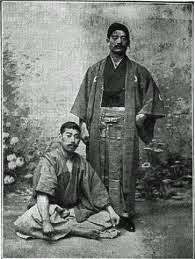
Barton Wright, innovator of ‘Bartitsu’, invited jujutsu experts Tani Yukio, his brother Kaneo, and Yamamoto Seizō to England in the early 1900s to teach and participate in music hall/theatre displays, challenging all comers for prize money. Kaneo did not enjoy these contests and soon returned to Japan. Wright then brought in Uyenishi Sadakazu, also known as Raku. Raku performed on stage, taught hand-to-hand combat at Aldershot Military School and Shorncliffe Army Camp in 1908 (arranged by Sergeant–Major Betts), and established the Golden Square Judo Club in London before returning to Japan later that year. I was very pleased to find a commemorative plaque honouring Sergeant–Major Betts on the wall of FOX Gym.
FOX Gymnasium
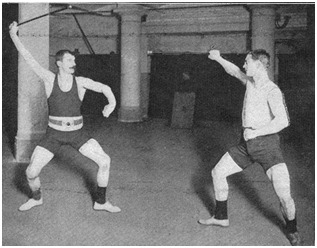
The building, completed in 1894, became home to the Army Physical Training Corps (APTC) and the main gymnasium at the Army School of Physical Training (ASPT), where all Army Physical Training Instructors (PTIs) are trained. Betts, listed as Staff Sergeant in Barton–Wright’s Bartitsu group in 1899, later became the first Master at Arms at ASPT (1907–1914). I was pleased to find his commemoration on a plaque: ‘Lieutenant J Betts – Coldstream Guards, Master At Arms 1907–1914; the first gymnastic staff member commissioned as Lieutenant Master at Arms, unprecedented in the British Army. Given the difficulties faced by ‘other ranks’ in those days, this says much about the personality and character of Lt Col Betts, who retired in 1924 with many decorations and a distinguished military career. He remains an example for all Corps members.’
Kendo in Britain
Although Kendo (Gekken) had first been displayed at the Japanese Village in Knightsbridge, London, in 1885. F.J Norman gave the first recorded combative bout of Kendo between two members of the British Army, thus establishing the long-standing and ‘special relationship’ of Kendo with the British Armed Forces.
F.J Norman
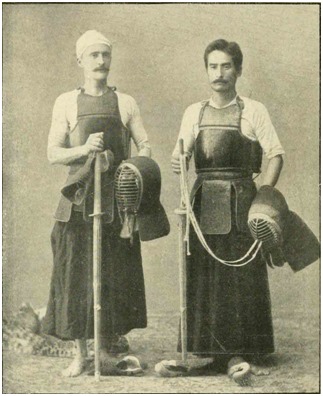
On his return to London, F. J. Norman, a British Indian army Officer, gave jujutsu and kenjutsu displays at the Marlborough Hall Polytechnic in Regent Street (now part of the University of Westminster) in 1905. An excerpt in The Times newspaper concluded that any aspiration to spread kendo in Europe was premature after witnessing the display. It was only on its introduction at the Budokwai in 1918 that kendo could commence almost on an equal footing, with judo being practised and taught regularly. Instructors present at the Marlborough Hall Polytechnic event included Kanaya, Tani Yukio, Miyake Tarō, Fujisake, Eida Saburō, Miss Roberts, F. J. Norman, Sergeant–Major Betts, and some pupils from the Japanese School of Ju-jitsu, 305 Oxford Street.
From Richard Bowen:
“Apart from the jujitsu, kenjutsu (fencing) was demonstrated by Norman and Miyake. There was also a bout between Norman, using a sword (a shinai is a practice sword made of bamboo), and the Sergeant-Major, using a single stick. The Sergeant–Major was metaphorically bisected once or twice.”
Beyond these key figures, the story continues with other notable military personnel who have also contributed significantly to this history.
Charles (R.A.) Lidstone is considered the grandfather of British Kendo, but his martial pedigree is very much established in the British military.
After attending Lindisfarne School in Blackheath, London, his parents chose for him to join the Royal Navy; this was the way such decisions were made at the time. He was accepted in 1908, aged twelve and three-quarters, as a Naval Cadet and trained firstly at the Royal Naval College, Osborne on the Isle of Wight for two years and after at the Royal Naval College, Dartmouth, Devon. Here, Lidstone was introduced to swordplay, and throughout the remainder of his life, fencing, arms, and armour were to be the greatest of all of his many interests. He would also later develop this as a profession. He competed three times at the Royal Navy and Military Tournament at Olympia, London, in 1911 as an under-16 cadet (Sabre v Sabre) representing the Royal Naval College, Dartmouth, in 1913 as a midshipman (Sabre v Sabre) representing HMS Superb, and in 1914 again as a midshipman (Bayonet v Bayonet) R.A. Lidstone RN. Throughout the Great War (1914-1918), R.A. served with the Grand Fleet and, as acting Sub-Lieutenant, was in charge of a gun turret on the HMS Marlborough, a battleship of the ‘Iron Duke’ class, flagship of Vice-Admiral Burney and under the command of Admiral Sir John Jellicoe at the battle of Jutland.
When fears of a war with Germany were high in 1937, R. A. joined the ‘Corps of Volunteers’ (a voluntary body formed to deal with Air Raid precautions). After training, he was made Staff Captain. Early in 1939, he went to Nottingham, working there as a civilian for the RAF in their codes and ciphers department. When war finally came in September of that year, he was conscripted into the RAF and made a Flight Lieutenant. With a powerful intellect that would tackle most problems both mental and physical, R.A. was often moved to quote before tackling any particularly demanding test, Lord Towards the end of the war, he was concerned with the handing over to the British a number of American Air Force bases, for which he was granted the temporary rank of Wing Commander, reverting back to Squadron Leader on his discharge.
Charles Boxer
Professional soldier, spy, linguist, traveller, international lover, prisoner of war, and prolific chronicler of history: Much was written about Charles Boxer following his death in 2000. However, what was not widely known was that, in the early 20th century, he was one of the very first British practitioners of kendo, Japanese fencing. A Truly British Samurai: The Exceptional Charles Boxer (1904-2000) gives a fascinating insight into the life of this extraordinary man, covering his secondment to the Japanese army as a Language Officer in the 1930s, ensuing kendo training and life in Japan, his imprisonment as a Japanese prisoner of war during World War II, and his subsequent academic career and private life.
Finally, it is worth noting the involvement of Budokwai members who served in the British Military, recorded from the Budokwai’s inauguration in 1918 until the outbreak of the Second World War, including Jack (John) Brinkley, member No 61, who joined in May 1919 as the son of Captain Frank Brinkley. Jack is listed as taking part in the 1919 display: Brinkley vs Uyeno in the bayonet vs kendo and the kendo matches. Although he was also practising judo, he was proficient enough in kendo to compete with Ashida, Matsuyama, Uyeno, and Satō.
Captain Francis Brinkley (30 December 1841–12th October 1912) was an Anglo-Irish newspaper owner, editor, and scholar who resided in Meiji-period Japan for over 40 years. He was the author of numerous books on Japanese culture, art, and architecture, as well as an English-Japanese Dictionary. He was also known as Frank Brinkley or as Captain Francis Brinkley.
In summary, the continuation and celebration of this event are a testament to the enduring, multifaceted bond between Japanese martial arts and the British Armed Forces over 121 years.
In summary, the continuation and celebration of this event are a testament to the enduring, multifaceted bond between Japanese martial arts and the British Armed Forces over the past 121 years.
Paul Budden Kendo Kyoshi 7-dan
Kodokan Kendo Club UK
The History of Army Kendo and the Army Martial Arts Association
Origins of Army Sport Governance
In 1918, the Army Sport Control Board (ASCB) was created as the regulatory body for all sports played within the Army. It rebranded as ‘Army Sport’ in 2023, but it continues to serve as the regulatory body. Sport is part of the employment offer for all serving Army personnel, and Army Sport oversees the allocation of public and non-public funds to support all sports recognised by the Army.

The Army Martial Arts Association (AMAA) was created in 1995 as a federation of individual martial arts that allowed for formal recognition by the ASCB. Major David Worsley of the Queen Alexandra’s Royal Army Nursing Corps, who had a notable background in Aikido but was also a Kendo practitioner, was a founding member of the association. He was responsible for Kendo becoming a founding discipline of the association. At that time, Kendo was joined by Taekwondo and Karate as fellow founders.
Major Worsley was responsible for numerous initiatives to grow Kendo within the Army until his retirement in 2020. Most well-known to the British kendo community is the Army Invitational, first held in 2010 (the one that Kodokan Kendo Club won). The Invitational was inspired by the Mumeishi 3’s competition and by the relationship Major Worsley had with Terry Holt of Mumeishi Kendo Club, an early supporter of the Army Martial Arts Association. It was created as a way for Army Kendo to thank clubs and individuals across the UK and internationally for their support of the Army, and while its design and size have changed over the years, it remains an invitational-only event. It is held annually in late February or early March. However, less well known is that the Invitational is the capstone event of a seven-day kendo programme. This starts with a five-day Kendo course for beginners and transitions to the annual Army Kendo Championship on Day 6, incorporating ‘novice’, ‘kata’, and ‘open’ events (the latter determining that year’s Army Champion), before ending with the Invitational on Day 7.
Major Worsley was also the Kendo representative on the executive board of the United Kingdom Armed Forces Martial Arts Association from its inception in the 2000s. This association represents the applicable martial arts of the British Army, the Royal Navy, and the Royal Air Force at the Armed Forces level. In that capacity, he helped create the annual Inter-Services kendo competition in 2009, which has been held 15 times (with a two-year hiatus due to COVID-19) and which the Army has won 13 times. He was also responsible for creating the unique sport of ‘Weapons Kata’ within the Army, and later the military, as an open event for martial artists to compete across disciplines – competitions are held annually at Army and Armed Forces levels. Finally, in 2016, he established the British Army as a BKA dojo, and that has provided a foundation for continued growth and success, most visibly in the number of competitions and events in which Army personnel participate throughout the year.
In 2025, the AMAA, along with Army Kendo, celebrated its 30th birthday, and today it is one of the largest and most successful sports associations within the Army. The founding arts have been joined by Brazilian Jiu-Jitsu, most recently Muay Thai boxing, and Weapons Kata. It has enjoyed considerable success at national and international levels, with numerous winners of competitions across all its disciplines, most notably in Karate.
For its part, the Army Kendo team honoured its early pioneers of Kendo by visiting Japan in 2015 to compete against the Japanese Self-Defense Force at the Ministry of Defense in Tokyo. This was the first time an overseas military contingent had visited Japan solely to compete against the JSDF in Kendo.
Of note, Army Boxing and Judo are also practised in the Army, but separately from the AMAA. They have existed as Army sports since 1882 and the late 1960s, respectively, and therefore possess their own regulatory structure distinct from the AMAA. However, along with the AMAA, all Army martial arts view Aldershot as their home.
Major Chris Jones
Army Kendo Coach
Copyright © 2026 Kodokan Kendo Club UK