
by Paul Budden
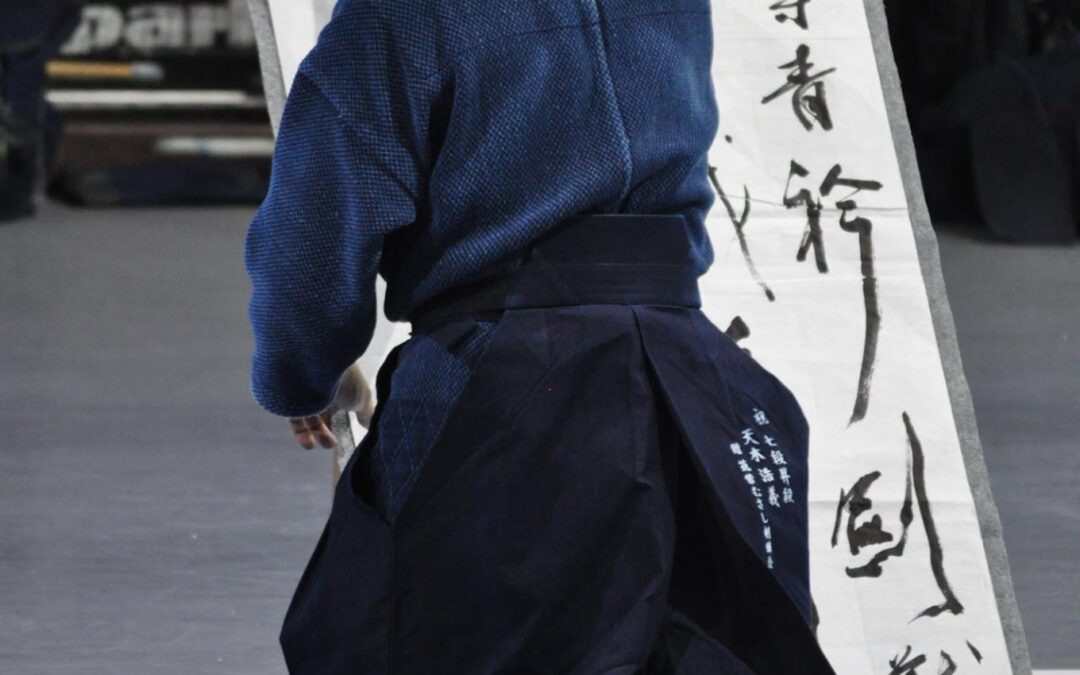
I’ve always been fascinated by the expression ‘Pen and Sword in Accord’ here some further reference for Budō & shodō. Which is quite fascinating, but I know very little about shodō.
Here a deeper and culturally accurate breakdown of each kanji for ‘The Principles of Nature and the Way of Budō.’
- The kanji
- Furigana (reading)
- Literal translation
- Nuance in Budō and Japanese philosophy
- How a calligrapher might interpret it in shodō (書道)
- 無常(むじょう — Mujō)
Literal meaning: Impermanence; transience of all things.
Budō nuance:
- Recognition that every strike, breath, and moment passes.
- Teaches detachment, adaptability, and awareness of time’s flow.
In shodō:
- Written with flowing, slightly asymmetrical brushwork to suggest change and movement.
- The “無” (nothingness) can be elongated to convey spaciousness.
- 静寂(せいじゃく — Seijaku)
Literal meaning: Silence; tranquillity; stillness.
Budō nuance:
- The calm centre within movement — akin to zanshin (残心).
- A state of awareness that is undisturbed by chaos.
In shodō:
- Often brushed with wide spacing and controlled pressure.
- “静” (quiet) may be written lighter, “寂” (loneliness) darker — showing serenity arising from solitude
- 浄化(じょうか — Jōka)
Literal meaning: Purification; cleansing; refinement.
Budō nuance:
- Training as a process of purifying the body and spirit.
- Repetition burns away ego and hesitation.
In shodō:
- Vertical strokes are drawn firm and straight — signifying moral clarity.
- The rhythm should feel “cleansing,” like clear water running.
- 調和(ちょうわ — Chōwa)
Literal meaning: Harmony; balance; accord.
Budō nuance:
- Blending with force rather than opposing it (aiki).
- The unity of timing, distance, and intention.
In shodō:
- Balanced and even — right and left radicals in symmetry.
- A calligrapher may create a circular composition to suggest continuous flow.
- 自然(しぜん — Shizen)
Literal meaning: Nature; naturalness; spontaneous order.
Budō nuance:
- Acting without artifice — movement that arises naturally, without resistance.
- The mature state of mushin (無心 — no-mind).
In shodō:
- Brushed freely with open space and natural variation.
- Each stroke should look alive, as if written by wind or flowing water.
- 陰陽(いんよう — In’yō)
Literal meaning: Yin and Yang; complementary dualities.
Budō nuance:
- The rhythm of advance and retreat, strength and softness.
- Understanding that opposites coexist — both needed for harmony.
In shodō:
- Contrasts in light and heavy brush pressure; thick and thin lines symbolizing balance.
- The brushstroke itself expresses duality — dark ink on white paper.
Overall Calligraphic Vision
A Japanese calligrapher would likely:
- Arrange these six kanji pairs vertically, perhaps in one scroll (kakejiku).
- Use balance and breathing space (間 ma) between each to reflect the philosophical rhythm.
- Choose a semi-cursive (行書) or grass script (草書) style for natural flow.
Copyright © 2025 Paul Budden